Software engineering for AI — measured with proof

Software that thinks. Data that helps succeed.

Systems that cost less to run every month — and that answer for you when your customer asks an AI.

Manual data work goes down — confidence in what your numbers say goes up — TALK TO US
steleios.com

What it costs to run

The same website, rebuilt to need far less server.

Before249MB
After72MB

71% lessserver capacity — same workload, same machine

You pay for servers every month, forever. You only pay to build it once.

Built on a foundation of fast,
production-grade tooling

Every layer is chosen for the same three reasons: a smaller bill at the end of the month, software that answers instantly, and customer data that stays where you can account for it. Here is what that means in practice.

Go logo

Backend Go

Your hosting bill stops growing with your business

Most business software sits on a heavy engine that has to stay switched on and fed memory even when nobody is using the system. Go does not work that way — it compiles into one small, self-contained program.

A platform handling millions of transactions a day runs comfortably on a server costing ₹1,800–₹4,500 a month, rather than the sprawling cloud setup that quietly becomes an invoice nobody budgeted for. When your traffic multiplies, you resize one machine instead of buying a cluster.

Under the hood

  • Go
  • Compiled, not interpreted
  • 15–30 MB of memory
  • No cloud cluster

60–80%less spent on cloud hosting

TypeScript logo

Frontend TypeScript, Vue 3

Screens that answer the moment your team clicks

The part your staff and your customers actually use. We build it lean, so a page appears straight away instead of showing a spinner while the browser downloads code it never needed.

Nobody abandons an order because the page stalled, and nobody on your team starts keeping a private spreadsheet because the real system is too slow to bear. The code also checks itself for mistakes before release, so fewer faults ever reach the people relying on it.

Under the hood

  • TypeScript
  • Vue 3
  • Vite
  • Bun
  • Errors caught before release

< 300 msfrom click to answer

PostgreSQL logo

Database and File Formats PostgreSQL, pgvector

One secure home for your records — and your AI

The usual arrangement keeps customers, orders and invoices in one database, then rents a second specialist service to hold everything the AI has read. We keep both inside the same proven database.

That means one place to secure, one thing to back up and one audit trail to hand an inspector — with no chance of the two copies drifting apart. Your history is stored in open, standard file formats, so it stays readable by anything and no supplier can hold it hostage.

Under the hood

  • PostgreSQL
  • pgvector
  • SQLite
  • Apache Parquet
  • Apache Avro
  • One backup, one audit trail
  • Open formats, no lock-in

₹0/mofor a separate AI database

PyTorch logoLangGraph logo

Machine Learning & AI PyTorch, LangGraph

AI that reads your documents without ever exporting them

Most AI proposals start by uploading your files to somebody else's cloud. We do the reading and indexing on hardware you control, and send out only anonymous, high-level questions — never the records themselves.

Contracts, patient notes and customer files stay behind your own firewall, which turns GDPR, HIPAA and SOC 2 from an argument into a straight answer. Your staff still get instant search across everything the business knows.

Under the hood

  • PyTorch
  • LangGraph
  • Private on-site models
  • Nothing sent to third parties

100%of your data stays with you

DuckDB logoPolars logo

Data Analytics and Dashboards DuckDB, Polars

Live dashboards without a data warehouse bill

Reporting normally means copying your data overnight into an expensive cloud warehouse that charges you for every question you ask of it. We do the number-crunching on the server you are already paying for.

Millions of rows of sales, stock or financial history are summarised on demand in about a second — so a board pack is a page someone opens, not a night of manual work before the meeting. One wealth management firm took its daily risk report from 45 seconds to 1.4, and removed ₹37 lakh a year of licensing along with it.

Under the hood

  • DuckDB
  • Polars
  • Apache Parquet
  • Runs on your own server
  • No cloud warehouse

₹0in per-query warehouse fees

…and the wider toolchain we work across

Systems we built,
and what changed

Starting with this one. Every number below was measured rather than estimated, and each carries the limit of what it proves.

Flagship — this website

We did it to ourselves first, and measured both ends

In August 2026 we rebuilt this platform on the stack above and kept the old one running long enough to measure both. Same virtual machine, same workload, nothing estimated.

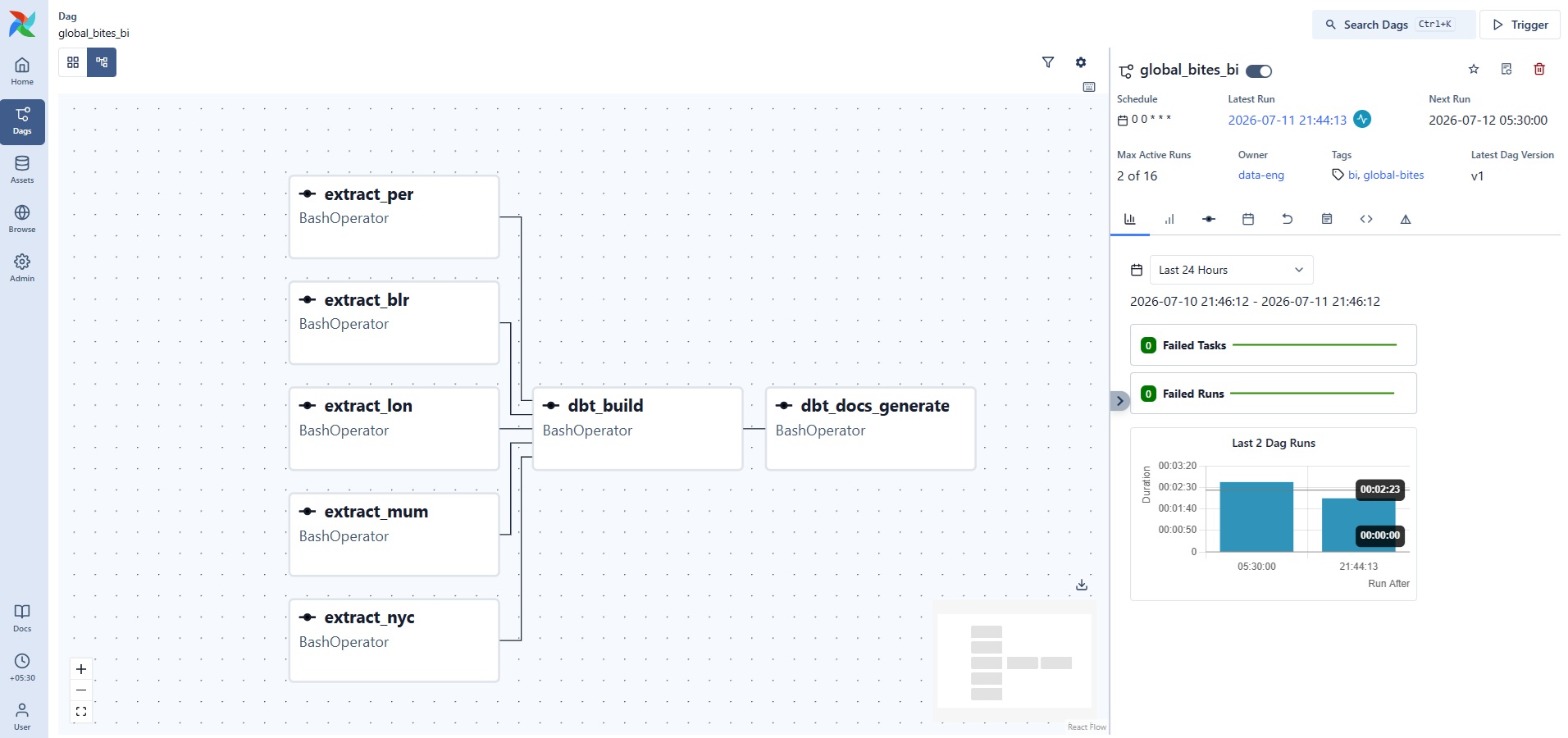
The rebuilt system uses less than a third of the memory the previous one did — while adding server-side rendering, semantic search over our own articles, and a machine-readable endpoint that AI assistants can query directly. The page you are reading is the demonstration.

249 → 72 MB
the whole platform Application and database together, down 71%
155 ms
to first byte Measured in production, not on a laptop
6–14 KB
per page, compressed Articles stay readable with JavaScript switched off
14
AI crawlers admitted by name Plus llms.txt and a live MCP endpoint at /mcp

Steady-state at low traffic, warm processes, cold database cache. Under sustained load PostgreSQL grows its cache and the gap narrows — the claim we defend is 71% less at the same workload on the same machine, not 71% less forever.

Every project, in full

You build it once.
You pay for it every day.

Every system sends you a bill every month, long after the invoice for building it has been paid and forgotten. Build it well and that monthly bill stays small for years. Build it cheaply and you pay the difference back, every day it runs.

What will it cost me every month?

The same cloud the largest companies run on, and a bill that grows with your system rather than ahead of it. It stays small because the system is small: we rebuilt this platform to run in 71% less, on the same machine, and measured both ends.

₹1,800 – ₹4,500
The computer it runs on That is a small system. A busier one needs a bigger machine, nearer ₹7,000/month — still a fraction of what the same work costs when nobody planned for it.
₹0
The database the AI searches It sits inside the database you already run, so there is no second subscription to pay.
₹0
Asking your data a question Your reports read your own files. Nobody charges you per report or per query.

Hosted on Google Cloud, Amazon Web Services or Microsoft Azure — your choice, and on your own account if you prefer. Your data, your name on the bill, nothing locked to us. The three price the same machine differently, and so do their Indian regions, which is why the first figure above is a range rather than one number.

Is it cheaper to keep the system I have?

Almost never. Here is the same three years, three ways.

  • KeepThe system you already haveAgeing servers, licences renewed every year, and the people it takes to keep it alive.₹1.3 – ₹3.5 crore+
  • RentA new one, rented by the monthBuilt out of cloud subscriptions. The bill never ends, and it grows as you use it.₹45 lakh – ₹1.3 crore+
  • OwnThe one we build youOne server you control, and the code is yours. No per-seat licences, no charge per question.₹4.5 – ₹13 lakh

Whatever you save by building cheaply, you pay back every month for three years, usually several times over. That is the only comparison we ask to be judged on.

What do you charge per hour?

₹1,200 – ₹5,000per hour

The bottom of that range is a database-backed website. The top is a real-time data system with AI inside it.

It is a range because it is not the same work. Writing the code behind a website and building a system that cannot drop a single message while thousands arrive every second are different trades, learnt over different years — and the rarer of the two is paid more, by us and by everyone else who needs it.

For example a database-backed website is 70 to 100 hours of work, so ₹85,000 to ₹1.5 lakh in all.

We quote the whole job, not an hourly bill, and one rate covers the whole team — design, engineering and testing, with no separate line for each. Every quote names the hours as well as the rate, so you are agreeing to a total rather than to a meter.

Fixed price · one to two weeks

Find out what yours costs you today

A short written report: what you are running now, what it actually costs you each month, where the money is going to waste, and what would break first. Yours to keep and act on, with us or without us — and it is why every figure we quote afterwards is measured rather than guessed.

If AI can build a whole system from one prompt, why does skill still cost anything?

Because it cannot, and the advertisements saying otherwise are selling a demonstration rather than a system. One sentence does produce something that runs, often within minutes, and that is genuinely remarkable. It is also not the same object as something you can put your customers, your money and your legal obligations inside — and the distance between the two is where every rupee or dollar of a real project goes.

Ask AI a well-posed mathematical question and it returns the answer and the working, faster than any of us could. Your business is not a well-posed question. It runs on your strategy, your processes, your governance, tax rules that change with every budget, and the decision — taken by you, for reasons only you hold — to run a discount for four days in October. No model knows any of that until a person tells it, and the telling is most of the work.

It does write the code, and we use it on every project: that saving is already inside the range above, not quietly kept. What it will not do is own the consequences. It will build a table that works beautifully until ten million rows and then stops on the day it matters. Asked what should happen when a payment succeeds and its confirmation fails, it does not raise the question — it simply picks an answer. It cannot know that the shortcut saving a week today is the breach you explain to a regulator next year, because it has no stake in next year.

That stake is what you are buying. On every project a named engineer reviews every line before it reaches your system, a tester tries to break it on purpose, and someone whose phone number you have signs off the architecture and answers for it at two in the morning. Real intelligence decides and artificial intelligence executes. We build with both — and the deciding is not the part that became cheap.